Continuous Temperature Monitoring
Reefer telemetry is streamed to dispatch in real time. Alerts are acted on, not archived.

Featured Capability
Lakeville Trucking is the Northeast's regional refrigerated food freight authority. From Rochester, NY, we haul frozen goods, fresh produce, dairy, bakery, seafood, meat, and shelf-stable products with continuous temperature monitoring and DC-grade appointment discipline.
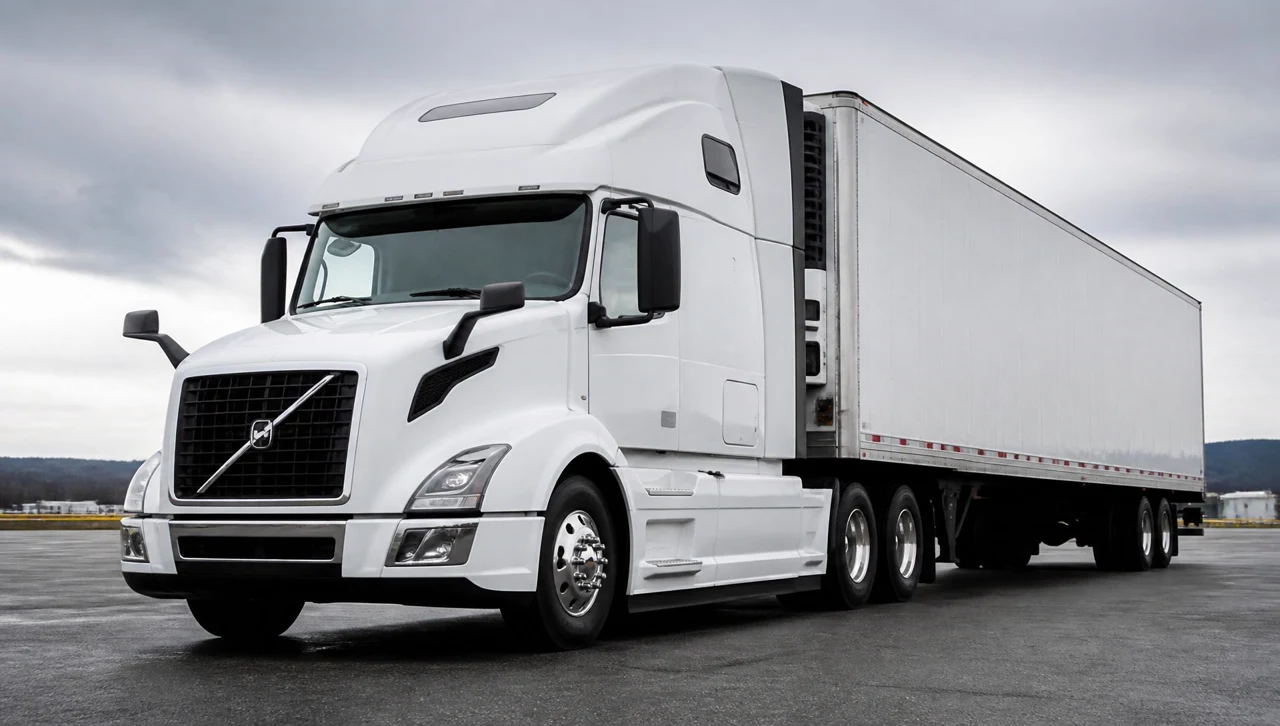
Food freight is unforgiving. A reefer that drifts two degrees, an appointment missed by twenty minutes, or a driver who mishandles a lumper check-in can compromise a full trailer of product and force a costly rejection at the receiver. That reality is exactly what Lakeville was built for. Since 2006, our fleet has specialized in temperature-controlled food distribution across the Northeast, with dedicated long-haul lanes reaching California, Texas, Florida, Georgia, and the Pacific Northwest.
We operate 60 modern tractors and 80 refrigerated trailers monitored continuously through Samsara telematics. Our drivers are trained specifically on food-grade freight handling — pre-cooling trailers, verifying set points at pickup, documenting temperature integrity in transit, and coordinating cleanly with lumper crews at distribution centers. The result is a food logistics program that grocery chains, foodservice distributors, and specialty food shippers can trust as their consistent cold chain partner.
Whether the load is a full truckload of ice cream bound for a national DC or a mixed pallet of dairy and produce for a regional grocer, the process is the same: precise temperature control, live visibility, and a driver who arrives at the receiver ready to keep the chain intact through unloading.
Reefer telemetry is streamed to dispatch in real time. Alerts are acted on, not archived.
Trailers arrive at pickup at the correct temperature, verified before product is loaded.
Dispatch plans against receiving windows so drivers check in on time, every time.
CDL professionals experienced with grocery, foodservice, and cold storage receivers.
Modern equipment with maintained thermostats, seals, and airflow — no compromised units.
Our shop maintains every reefer unit; problems are caught before a load is dispatched.
Frozen freight sits at the sharp end of the cold chain. Ice cream, frozen proteins, frozen produce, and prepared foods require sub-zero temperatures held with zero tolerance. Any warm spot in a trailer becomes a rejection risk, and DCs verify pulp temperatures before signing a receipt.
Our frozen freight program pairs pre-cooled trailers with drivers trained to defend the reefer set point through every stop. Doors are opened only as needed, temperature logs are captured continuously, and dispatch monitors for anomalies while the load is in motion. If something drifts, we know before the receiver does.
Fresh product moves fast or it doesn't move at all. Produce shipments live inside tight temperature and humidity windows; dairy demands the same set point every mile; bakery goods have to arrive before the shelf-life clock runs out. That's why Lakeville treats fresh freight as a scheduling problem as much as a temperature problem — planning routes, pickups, and receiver appointments to keep product moving.
Our reefer fleet handles the full range of chilled fresh goods, from leafy produce and orchard fruit to milk, cheese, yogurt, and fresh-baked breads and pastries. Drivers verify temperature at pickup, log conditions through transit, and coordinate on-time delivery to grocery DCs and foodservice warehouses across the Northeast.
Protein shipments carry two kinds of risk — cold chain risk and food safety risk. Lakeville handles both by holding a strict temperature discipline and by training drivers on the receiver protocols that grocery and foodservice DCs actually enforce. Meat and seafood loads move on tight schedules, with pulp temperature checks at delivery, and we structure our dispatch around that reality.
From fresh seafood requiring rapid transit to frozen protein bound for national distribution, our reefer trailers keep the set point locked and our drivers arrive prepared to defend the load through unloading. That's how we've earned repeat business from protein shippers who cannot afford a rejected truck.
Not every food shipment needs a reefer, but many need the same operational rigor. Our dry van fleet handles shelf-stable groceries, packaged foods, canned goods, and beverages moving between manufacturers, co-manufacturers, and retail distribution centers. Mixed loads are common — an appointment discipline built for reefer service transfers naturally to ambient product.
Combined with our Rochester warehousing and cross-dock capability, Lakeville can consolidate LTL food shipments, stage inventory ahead of delivery windows, and rebalance loads between trailers when a receiver's schedule shifts. That gives food shippers a single, flexible carrier for the entire freight profile.
Grocery and foodservice DCs run on the clock. A driver who arrives an hour late can lose the appointment for the day; a driver who arrives an hour early can be turned away. Lakeville dispatch plans every food load around receiver windows and treats those appointments as commitments, not suggestions.
Food safety compliance is table stakes. Our trailers are inspected for cleanliness, seal integrity, and reefer performance before every food load. Temperature verification is documented at pickup, in transit, and at delivery. Where receivers require sanitation logs or wash tickets, we provide them. That documentation trail is what turns a good haul into a defensible cold chain.
The process is consistent because the process is what protects the product. When you tender a food load to Lakeville, dispatch pre-cools the trailer to the required set point before it ever backs into the shipper's dock. The driver verifies the set point on arrival, monitors reefer performance while loading, and applies the seal at close-out.
Live GPS and reefer telematics stream to dispatch across the entire trip. If a set point drifts, if the door opens unexpectedly, or if the trailer's ambient reads outside spec, we're alerted immediately and the driver responds. On delivery, temperature is verified at the receiver, unloading is coordinated with lumper crews as needed, and the load is closed out with a full temperature record.
That's what cold chain integrity actually looks like in practice — not a promise, but a workflow. And it's why food shippers across the Northeast keep bringing Lakeville back for their most temperature-sensitive freight.
Food Transportation works best in combination with our other capabilities. These pages go deeper on the services shippers most often pair with it.
The reefer fleet, telematics, and cold chain discipline that makes food logistics possible.
Learn moreOn-site Rochester warehouse for staging refrigerated inventory and holding food product between moves.
Learn moreDock-to-dock food freight transfers with minimal temperature exposure and no long-term storage cost.
Learn moreNortheast regional food distribution paired with dedicated long-haul lanes to national markets.
Learn moreSee every capability Lakeville offers under one roof — refrigerated, dry van, warehousing, cross docking, and dedicated freight.
Back to hubYes. Our reefer fleet handles deep-frozen freight with pre-cooled trailers and continuous temperature monitoring — ice cream, frozen proteins, frozen produce, and prepared frozen meals.
We deliver to grocery, foodservice, and specialty food DCs across the Northeast every day. Appointments, lumper coordination, and temperature verification at receipt are part of standard service.
Yes. Our drivers coordinate directly with lumper crews at distribution centers. Where receivers require our lumpers, we can dispatch our own Rochester crews for same-day service.
Trailers are pre-cooled before pickup, set points are verified at load, and reefer telematics stream continuously to dispatch. Alerts route in real time so we can act on drift before it becomes a rejection.
Yes. Our reefer trailers can carry mixed loads when temperatures align, and our Rochester cross-dock can consolidate mixed food LTL freight into a single trailer for regional distribution.
Frozen goods, fresh produce, dairy, bakery, seafood, meat, protein, and shelf-stable groceries. Our drivers are trained across every food category we haul.
Yes. Trailer wash tickets, sanitation logs, and pre-trip inspection records are available for shippers whose food safety programs require them.
Regional coverage across the Northeastern United States, plus dedicated lanes between Rochester, NY and California, Nevada, Oregon, Washington, Utah, Colorado, Texas, New Mexico, Florida, Georgia, and the Carolinas.
Tell our logistics team about your lanes, volumes, and service expectations. We'll build a solution that keeps your product moving on schedule.